

Environmental considerations for nonprofits across the Asia-Pacific using AI
Article updated 31 July 2026.
It might surprise you to learn that the computing behind most AI results often don’t take place on your device. The way AI is capable of delivering fast, powerful and detailed responses is by utilising data centres sometimes tens of thousands kilometres away from you at your desk.
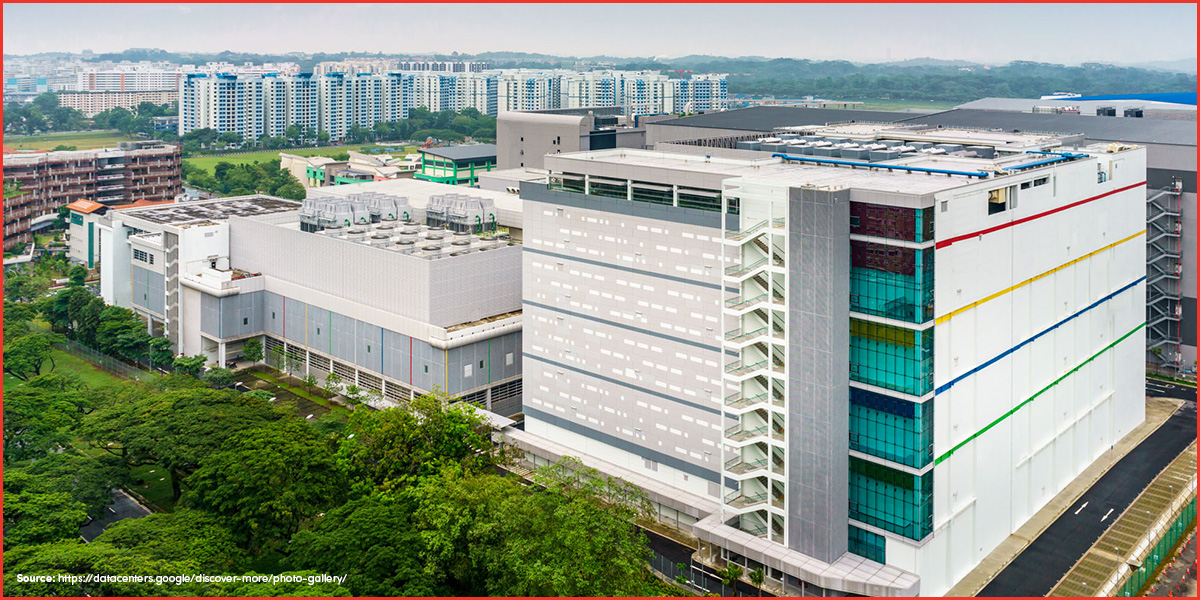
These AI data centres are booming across East Asia, with new facilities popping up in places like Singapore, Hong Kong, and Tokyo. In Australia, major data centre hubs are concentrated in Sydney and Melbourne, with additional growth in Brisbane and Perth. Global providers and hyperscalers (large scale cloud service providers like Google’s Cloud, Microsoft’s Azure and Amazon’s AWS) operate facilities in these regions to support cloud and AI workloads, increasing local demand for electricity and water alongside broader digital growth.
These facilities use huge amounts of water for cooling, especially during heatwaves, and that demand is expected to rise as AI adoption grows. In Australia, recent reports show that data centres running AI models are driving up water demand.
For nonprofits focused on social good, climate resilience or community wellbeing, this is a big deal, and ignoring these impacts can sometimes feel at odds with your values.
What are the risks, concerns and costs
With this new technology comes some risks, concerns and costs for nonprofits to consider as they decide to utilise various AI systems. Let’s explore what we know about these data centres.
Energy use
According to the Ministry of Trade and Industry, data centres in Singapore alone consumed over 7% of the country’s total electricity in 2024, and is set to rise to 12% by 2030 as demand rises for AI workloads. (Channel News Asia, May 2024. Data centre operators seek greater clarity on green roadmap amid growing digital demands). The International Energy Agency expects global data-centre electricity consumption to more than double between 2024 and 2030 (Energy and AI, IEA, April 2026).
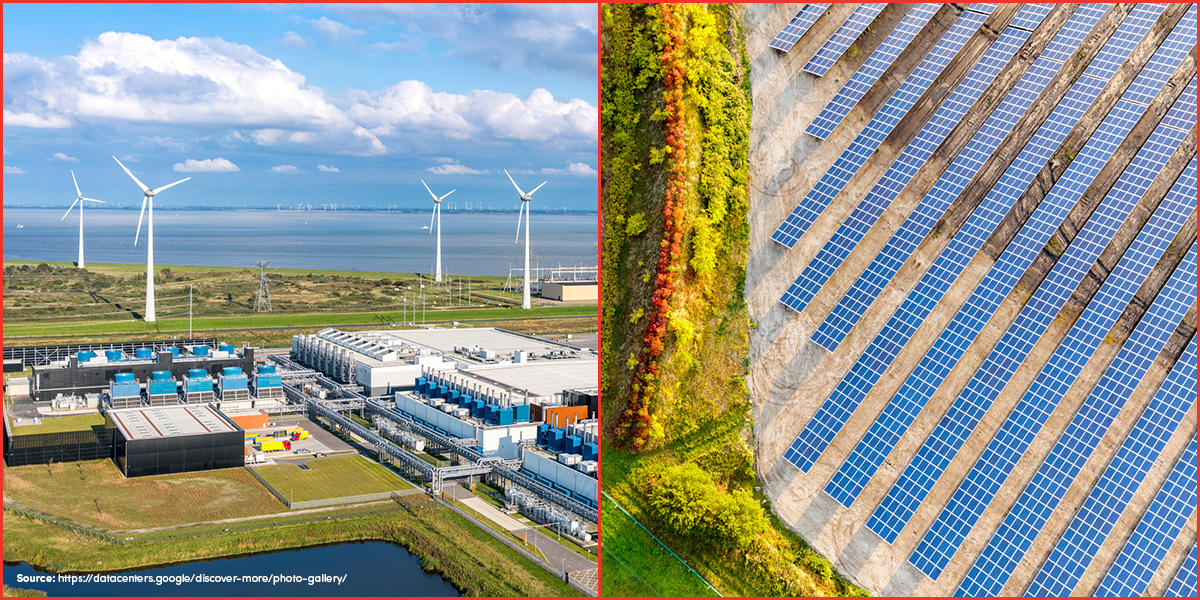
Energy demand from AI workloads is not just growing in volume, but intensity. Training large AI models requires sustained, high‑density computing over long periods, placing pressure on electricity grids. In regions still heavily reliant on fossil fuels, this can significantly increase carbon emissions unless paired with renewable energy procurement or grid decarbonisation.
Water use
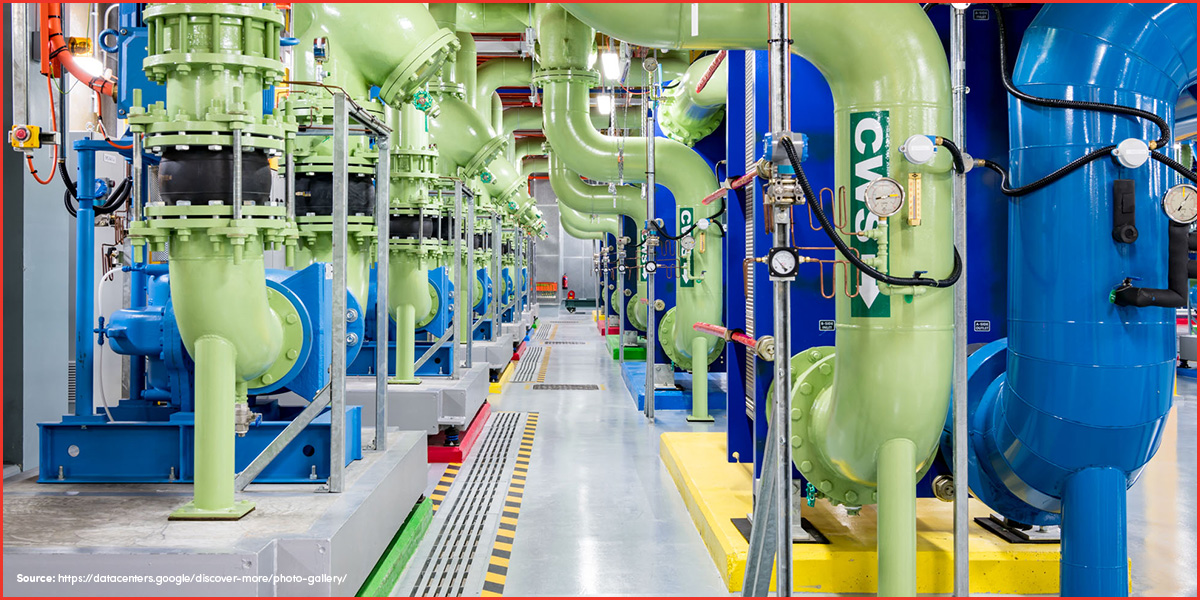
Traditional cooling can use up to millions of litres of water per year per facility.
A single 1-megawatt data centre can use up to 25.5 million litres of water each year for cooling, roughly the daily water use of 300,000 people.
Australia has more than 160 operational data centres as of April 2026, mostly in Sydney and Melbourne, and more are in the pipeline (Australia Data Centre Forecast Report, Issue 1, 2026).
In Melbourne, Australia, Greater Western Water is assessing applications that could consume nearly 20 gigalitres of water annually, equivalent to the drinking water used by 330,000 residents. Sydney Water projects that by the end of the decade, data centres could use a quarter of the city’s annual drinking water supply. (ABC News, Dec 2025 Demand for water cannot be an 'afterthought' in AI push)
The data on exactly how much water use an AI query uses is complex, and often confusing. It’s also dependent on the model, data centre, cooling system, electricity source and location. A popular shared data point is from Sam Altman, who shared that the average AI query (like ChatGPT) uses about 1/15th of a teaspoon of water for cooling. Other sources estimate that OpenAI’s GPT-3 model uses a 500ml bottle of water for roughly 10-50 medium-length responses, depending on when and where it is deployed and the cooling system behind it (Making AI Less ‘Thirsty’, Association for Computing Machinery, 2025).
The UN estimates by 2030, AI could consume nearly triple the combined annual electricity use of Pakistan, Bangladesh and Nigeria (UN News, 2026). What we definitely know for sure is that the energy resources required are high, and an AI text query is lower than generating a video, image, or training a model.
Carbon footprint
East Asia’s data centre market is projected to reach AUD $48 billion by 2028, with emissions a growing concern. Hong Kong’s new “supercharged” centres are targeting PUE (Power Usage Effectiveness) scores below 1.2, but the regional average is still closer to 1.6–1.8.
In Australia, the carbon footprint of data centres varies widely depending on location and energy sourcing. Facilities connected to grids with higher renewable penetration tend to have lower emissions, while peak demand periods may still rely on fossil fuel generation. As AI workloads scale, the carbon intensity of electricity becomes a critical factor in overall environmental impact. The Australian Government’s recent focus is encouraging operators to support renewable generation, contribute to grid connection costs and demonstrate that development delivers broader public value (Australian Minister for Climate Change and Energy, 2026).
Cost
As energy prices rise in many countries around the word, for NFPs, this means cloud and AI services may get more expensive as providers pass on infrastructure costs. In Australia, rising electricity prices, water constraints, and competition for suitable land are contributing to higher operating costs for data centres. These pressures are likely to flow through to cloud and AI service pricing over time, affecting nonprofit budgets that rely on digital infrastructure.
What’s being done to change this?
It’s not all about maintaining status quo, with some data centres trying new techniques to tackle the environmental impact of AI.
Submerged cooling
“Submerged” cooling where servers are dunked in special liquids to keep them running fast and cool. It sounds futuristic, but behind the headlines are real risks and costs that NFPs in the APAC region should understand.
Submerged cooling can reduce water usage, but it still requires significant energy and specialised chemicals.
Submerged cooling uses synthetic fluids that must be carefully managed and disposed of with environmental and safety considerations. Spills or leaks can pose environmental hazards if not handled properly.
READ: East Asia ignites: Submerged, supercharged, and sustainable - DCD
Different water sources
Not all water use is equal, while most data centres rely on municipal (drinking) water for cooling, some are starting to use recycled or non-potable water. Water use isn’t just about quantity, it’s about location. Using water in areas already under stress (like during droughts or in regions with limited supply) can have outsized impacts.
Why does this matter to nonprofit organisations?
Every time we use AI, whether it’s generating content or analysing data we’re tapping into infrastructure that consumes energy and water. For organisations committed to sustainability, this means we need to think beyond convenience and ask: “Is this tool aligned with our mission?”
Practical steps for nonprofits
As nonprofits, what can we do to strive for a more ethical and ecologically-minded approach to AI? Here’s a few ideas.
Consider your personal usage
- Be specific in your prompt: asking exactly what you need “in two sentences”, or “as dot points”, for example. Vague prompts produce long outputs and longer outputs use more energy.
- Use the right tool for the job: not every task needs a prompt. Shortening a paragraph or checking grammar doesn’t always need generative AI.
- Avoid repeated regeneration: Refine your prompt rather than hitting regenerate multiple times.
- Go easy on images and video: a single AI-generated image uses significantly higher power than text chat, and video is even higher.
- Check what’s running in the background: chats waiting for a question, agents, AI notetakers and auto-summarise in your tools can add up, so turn off what you don’t use.
Ask about sustainability
When choosing a cloud or AI provider, check their energy sources, cooling methods, and carbon commitments. Look for published stats on PUE, water use, and emissions.
For example, ask whether a provider publishes an annual sustainability report, discloses data centre energy mix or commits to science‑based emissions targets.
Consider carbon offsetting
Nonprofits can explore carbon offsetting by purchasing verified offsets linked to renewable energy, reforestation, or community‑based climate projects. While offsets should not replace efforts to reduce energy use, they can help address residual emissions associated with AI and cloud services.
Prioritise local data centres with green credentials
Some providers now use recycled water, air cooling, or renewable energy to reduce impact. Singapore’s Green Data Centre Standard is a good benchmark.
In Australia, voluntary sustainability reporting and renewable energy commitments are increasingly used to signal greener operations, while Japan has government‑led efficiency benchmarks for data centres (The plan for revision of the energy efficiency benchmark - ECCJ / Asia Energy Efficiency and Conservation Collaboration Center).
India is also seeing growing emphasis on energy‑efficient design and renewable integration as part of broader digital infrastructure policy. (Scaling up India’s data centre industry sustainably | India | Law.asia & Policies And Regulations | MINISTRY OF NEW AND RENEWABLE ENERGY | India).
Add sustainability to your AI policy
Make sustainability a priority for your organisation, but adding it as a clause to your AI Policy. Learn more about crafting your own AI policy here.
Factor in total cost
Don’t just look at price, consider the environmental and social costs of your digital footprint.
Advocate for transparency
Push providers to publish clear stats on energy, water use, and emissions.
Use AI where it adds real value
Focus on projects that help your mission and offset resource use elsewhere (e.g. smarter logistics, digital forms to cut paper).
The bottom line
While AI data centres are getting faster and greener, the risks and costs are real. For nonprofits in the APAC region, the best approach is to stay informed, ask tough questions and make choices that align with your values. Sustainable tech isn’t just a buzzword, it’s part of our responsibility to the communities we serve.